
The Federal Reserve guides the US economy through its dual mandate: price stability and maximum employment. To assess economic conditions, it monitors PCE inflation, the unemployment rate, and real GDP, adjusting reference interest rates and its balance sheet to contain inflationary pressures or stimulate economic growth.By Daniel Mejía Copied SHARE What is the Fed's dual mandate? linkedin whatsapp telegram reddit pocket email The Fed’s dual mandate seeks to balance price stability and maximum employment to guide economic growth.To assess the economy, the Fed primarily monitors the PCE inflation, the unemployment rate, and the real GDP rate of change.The Fed raises interest rates to moderate inflation by making credit more expensive, or reduces them to revive consumption and investment during economic slowdowns.Through its balance sheet, the Fed injects liquidity by purchasing assets or withdraws monetary stimulus by letting its securities mature during restrictive cycles.Which are the main objectives for the Federal Reserve?The Federal Reserve (Fed) is governed by two main mandates: price stability and maximum employment. These core monetary policy objectives differentiate the US central bank from many other global central banks, where price stability tends to be the primary or sole focus.Price stability objectiveThe Federal Open Market Committee (FOMC) maintains an explicit long-run inflation target of 2%, established so as not to distort the consumption, saving, and investment decisions of US households and businesses. This objective is considered a neutral benchmark where the growth of the real economy can continue to expand without triggering inflationary or deflationary spirals over time.On the one hand, if inflation accelerates considerably (an inflationary spiral), it poses significant risks to the general population as purchasing power declines. This severely impacts consumption and investment patterns, disproportionately affecting low-income households that face subsistence pressures.On the other hand, deflationary spirals (falling price levels) tend to erode corporate profit margins because selling prices must decrease to clear accumulated inventories. This often leads to job losses as companies seek to cut operational costs.Maximum employment objectiveThe FOMC defines maximum employment as the highest level of employment that the economy can sustain without generating elevated inflationary pressures. Unlike the inflation target, employment variables do not correspond to a single, fixed numerical metric that the central bank seeks to maintain permanently. Instead, the Federal Reserve analyses contextual structural factors—such as labour force demographics, education levels, technology adoption, and labour market regulations—that influence the labour market.So long as an expanding level of employment does not exert excessive upward pressure on wage growth and broad price levels, it is considered a healthy and sustainable employment environment.Economic indicators monitored by the Federal ReserveWhile the Federal Reserve constantly analyses various economic metrics to gauge broader conditions, it focuses with particular emphasis on three core indicators intrinsically linked to its dual mandate of price stability and full employment. These key indicators form the core foundation of the central bank’s official economic projections: the Personal Consumption Expenditures (PCE) Price Index, the unemployment rate, and the Gross Domestic Product (GDP) growth rate.Personal Consumption Expenditures (PCE) Price IndexThe Personal Consumption Expenditures (PCE) Price Index is the Fed’s preferred inflation metric because it encompasses a broader scope and a more accurate weighting of US household expenditure compared to the Consumer Price Index (CPI). In this context, the PCE index better reflects dynamic consumer behaviour, such as substitution effects when relative prices change.Unemployment rateThe unemployment rate measures the proportion of the economically active population actively seeking work but unable to secure employment. While full employment might conceptually be viewed as a state with an exceptionally low unemployment rate, the Fed evaluates broader cyclical and structural factors to determine whether the labour market is stable or experiencing underlying stress.Gross Domestic Product (GDP) growth rateEconomic growth is fundamentally measured through changes in Gross Domestic Product (GDP). A expanding economy typically exhibits positive growth rates across both year-on-year and quarterly periods. The Federal Reserve continuously tracks GDP performance to analyse consumption, investment, and productivity trends across the US economy, complementing its assessment of inflation containment and maximum employment.The Fed’s main monetary policy toolsAlthough the Federal Reserve’s monetary policy toolkit is extensive and continually evolving, two key instruments are monitored closely by market participants due to their substantial impact on the real economy: interest rate decisions and balance sheet adjustments.Interest rate decisionThe Federal Reserve seeks to influence consumption and investment behaviour by raising or lowering its reference interest rate (the federal funds rate). If inflation rises above acceptable levels, the central bank raises interest rates to increase the cost of credit throughout the banking system. Consequently, consumer spending tends to moderate due to higher interest rates on personal loans and mortgages. Simultaneously, corporate investment in productive projects tends to decelerate as the cost of capital increases. Additionally, during such monetary tightening cycles, allocation toward fixed-income investments often increases as yields become more attractive, decreasing consumption.Conversely, when the economy enters contractionary or stagnant periods, the Federal Reserve lowers interest rates to encourage consumption and capital expenditure through cheaper financing, whilst discouraging capital allocation to fixed income as yields decline
What is the Fed's dual mandate?

Related
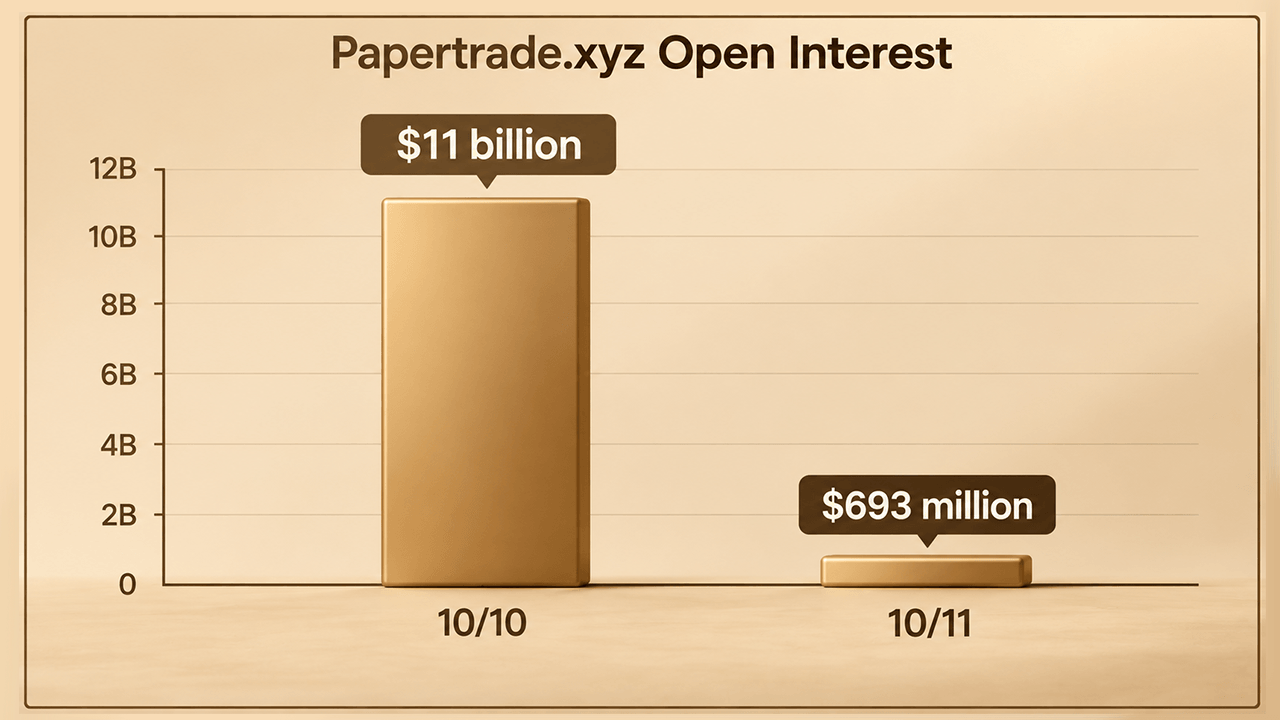
Papertrade's Wild Weekend Ends With 93.7% Open Interest Wipeout
Papertrade’s open interest plunged 93.7% in 24 hours as $48 million in TVL vanished amid trading manipulation concerns.

Crypto market’s weekly winners and losers – STRK, PORKU, RAIN, MINA - AMBCrypto
This week, the market moved closer to recovering its October losses. Here’s a quick look at how some of your favorite coins performed.

DWF Labs Takes Bitgo to Court Over $141M Token Lock-up Dispute
DWF Labs affiliates sue Bitgo for $141 million, alleging early FF and ESPORTS token sales breached lock-up agreements.

The real cost of living in your favorite Halloween movie home — from $295K to $16.8M
The biggest jump scare from these famous horror movies isn’t the gore – it’s the sticker shock from the most iconic homes.