In traditional markets, a drop that size would count as a crash. For bitcoin, that's a far gentler slide than in past bear markets
Exactly a year after the 2013 peak, bitcoin was down 69.7%. Similarly, it was down 82.3% following the December 2017 top. A year after the November 2021 high, it was down 74.6%, according to CoinDesk calculations
This shallower decline isn’t limited to the one-year anniversary. The bear market itself has been milder. At its lowest, just below $59,000 on June 30, bitcoin was down more than 53% from its peak. Past bear markets saw prices plummet 77% to 85% from record highs
Essentially, two things have changed. The bear market has been shallower, and its worst point arrived earlier. In previous cycles, the trough often came around the one-year mark or later; this time, it came after about nine months, and the subsequent recovery has been fast
“The most notable changes are the significantly shortened duration of the drawdown and the reduced time spent at the bottom," Tim Sun, senior researcher at HashKey Group, told CoinDesk
The main reason previous bear markets saw prices fall much lower and for longer is who drove the preceding bull runs. Retail traders and their use of leverage often fueled those rallies, which frequently ended in crashes marked by fund blowups and exchange failures, as seen in 2022
The 2023–25 uptrend, by contrast, was driven by institutional inflows through regulated investment vehicles such as ETFs, while the subsequent downturn reflected a macro-led reversal of those flows
"While previous cycles were driven primarily by retail investors and leverage, buyers in this current cycle increasingly stem from outside the crypto market, including ETFs, asset management giants, family offices, and even corporations. This growing demand for external asset allocation is the core driving force behind these shifts," Sun said
The recent downturn was not entirely driven by "black swan" events, according to Sun; rather, it was largely caused by capital outflows resulting from changes in the external macroeconomic environment and asset allocation landscape
"Consequently, despite undergoing significant adjustments, the market did not trigger the persistent negative feedback loops seen in the past," he noted
"ETF allocation money rebalances to target weights — it buys weakness by construction.”
Leverage was cleared out right at the top and never properly came back, Ardern said. "Hence nine months to grind out a 53% decline, rather than a few months of cascading liquidations taking it down 80%," he said
Most of the leverage was unwound on Oct. 10 last year, when a macro-driven sell-off triggered more than $19 billion in liquidations across crypto derivatives markets. Temporary pricing deviations on Binance for tokens including USDe, wBETH and BNSOL added to the stress, while auto-deleveraging mechanisms on several exchanges forcibly closed profitable positions to cover losses
Calmer crashes come with a cost. Calmer rallies
"As bitcoin evolves and more participants come to market, the realized volatility of the asset will decrease. This means shallower drawdowns and lower peaks and is likely a contributing factor to the more muted sell-off we saw in the last cycle," Jeff Anderson, head of U.S. at market-making firm STS Digital, said
Bitcoin’s volatility has steadily declined since U.S. spot ETFs debuted in early 2024, tempering the “Wild West” reputation the asset once carried, as CoinDesk noted last year
Sun pointed to the numbers. "Bitcoin's current annualized volatility hovers around 40%, which is noticeably lower than its long-term historical levels exceeding 80%," he said
Ardern sees the same in the options market, where bitcoin's annualized implied or expected volatility index, DVOL, has been pinned around 35 points
"The shape going forward is probably a staircase — grind up, air pocket, fast repair — rather than a parabola," he said
Sun still isn't ruling out big rallies and the reason lies in bitcoin's tokenomics
Bitcoin's supply is capped at 21 million, and long-term holders own a high share of it. Add to that large ETF inflows over a short period, a rapid improvement in macro liquidity, or concentrated short covering, and prices could still see sharp bullish moves, he explained
In those cases, "marginal demand can still exert a powerful upward push on prices, potentially triggering non-linear surges."
Ardern's bigger warning is about positioning. Implied volatility is near its lowest percentile on record, and one-year options skew is still neutral to bearish
"The derivatives market has bought 'shallow', but nobody is willing to pay for 'upside exposure' yet,” he said
Options skew measures the difference between pricing for bullish call options and bearish put options. A neutral skew means traders aren't yet chasing calls or upside exposure
He also said that the moment the shallow-drawdown story is loudest is usually when downside protection is cheapest
The depth of the next decline will be decided by the long end of the U.S. Treasury market, not bitcoin's chart, according to Ardern
"If the 30-year [yield] defence keeps failing, this cycle may not stay shallow either," he said. In other words, if the 30-year yield keeps rising, we might see a fresh sell-off in bitcoin
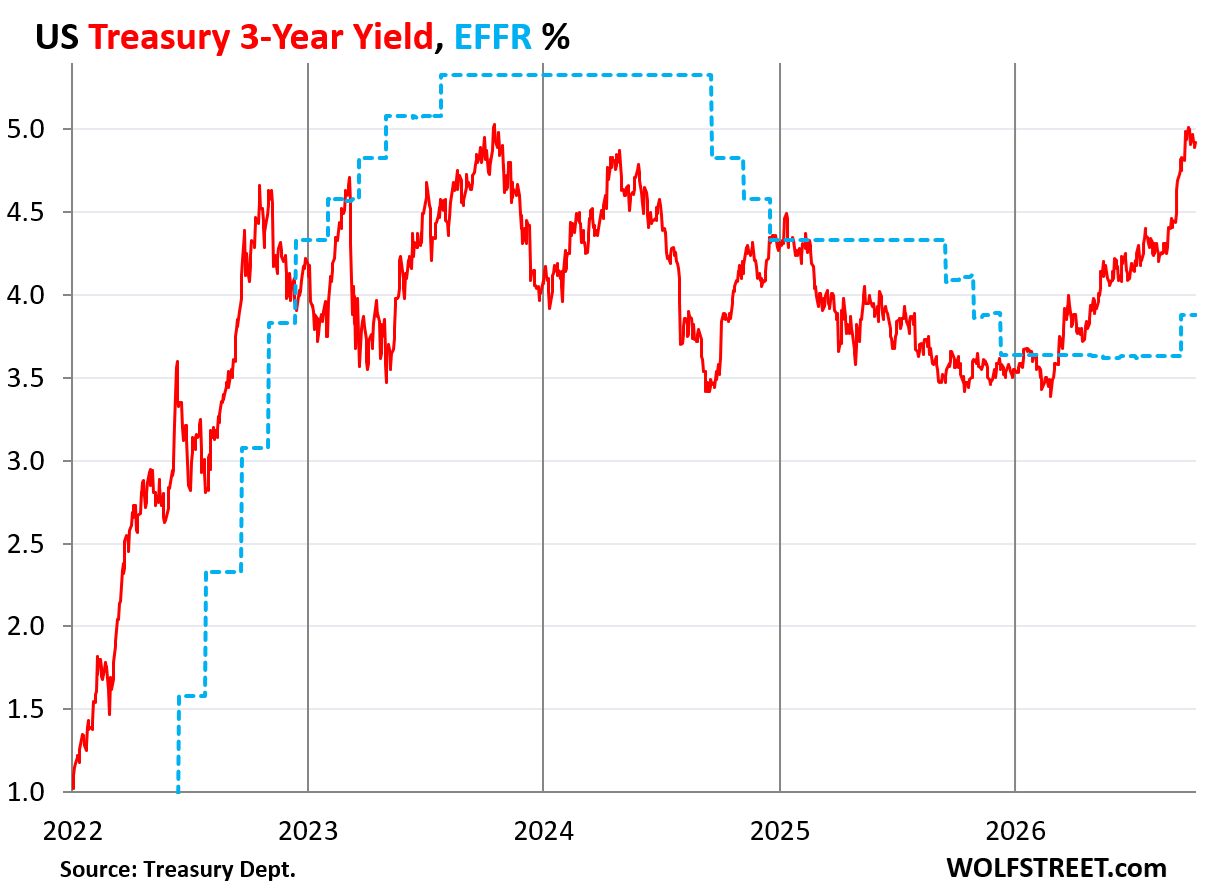
The 30-year yield recently hit a high of 5.7%, the level last seen in April 2002. It has risen by more than 80 basis points this year, raising the opportunity cost of holding non-yielding assets like bitcoin and gold
The Treasury announced an increased bond buyback program in August to stem the rise in yields. BTC reacted positively, rising from roughly $64,000 to nearly $80,000 in days. But yields haven't stopped rising yet. Some analysts believe this hardening of yields is driven by fiscal concerns, not the growth story, which makes it bullish for gold and bitcoin
Ardern further likened today's market to the Nasdaq of 1994 to 1999, when "policy slows down, the cycle stretches, every interim correction is shallow."
"Just remember how that story ended," he said. The index peaked in March 2000 and then lost nearly 78% over the next two years or so
1Everyone wants SCOTUS to take up prediction markets: State of Crypto 6 hours ago2Clarity's failure could speed crypto innovation while shielding incumbents8 hours ago3President Trump declares 'energy ceasefire' between Russia and Ukraine8 hours ago4IMF finds demand for tokenized stocks, says the market is still volatile, illiquid11 hours ago5One year after 10/10 flash crash, bitcoin and ether liquidity have rebuilt, but altcoins still face risks1 day ago6Tokenized commodities look beyond gold as lending and oil open new markets1 day ago7Bitcoin's $19 billion wake-up call: One-year after flash crash, has crypto learned anything?1 day ago8Bitcoin's volatility has plunged, but extreme price swings are more frequent than in 20181 day ago9Robinhood Chain slowdown spreads from fees to trading as transactions fall more than 40%1 day ago10XRP Ledger patched decade-old bug that could create billions of dollars in XRP from nothing1 day agoLatest Research Beyond the Risk-Free Rate: Diversified Real World Yield in Productive StablecoinsBeyond the Risk-Free Rate: Diversified Real World Yield in Productive StablecoinsDiversified RWA stablecoins sustain 5-7% yield from real credit as crypto funding compresses to ~4%. GENIUS pushes yield off-chain; TAM grows to $4B in 3 years
Diversified RWA stablecoins sustain 5-7% yield from real credit as crypto funding compresses to ~4%. GENIUS pushes yield off-chain; TAM grows to $4B in 3 years
Diversified RWA stablecoins sustain 5-7% yield from real credit as crypto funding compresses to ~4%. GENIUS pushes yield off-chain; TAM grows to $4B in 3 years